Oil and fuel · Tankers
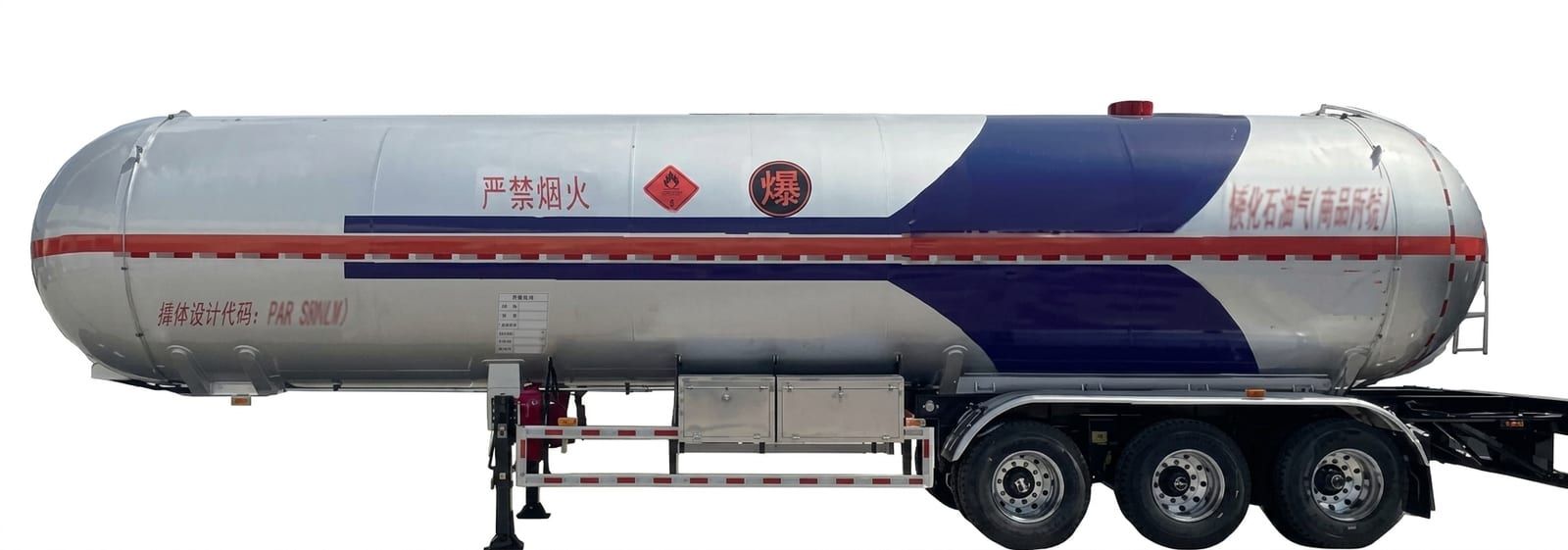
Oil Tanker Semi-Trailer
We build these. Tank size, compartments and axles are specified by you before we start, not chosen from what happens to be in a yard.
What this tanker is
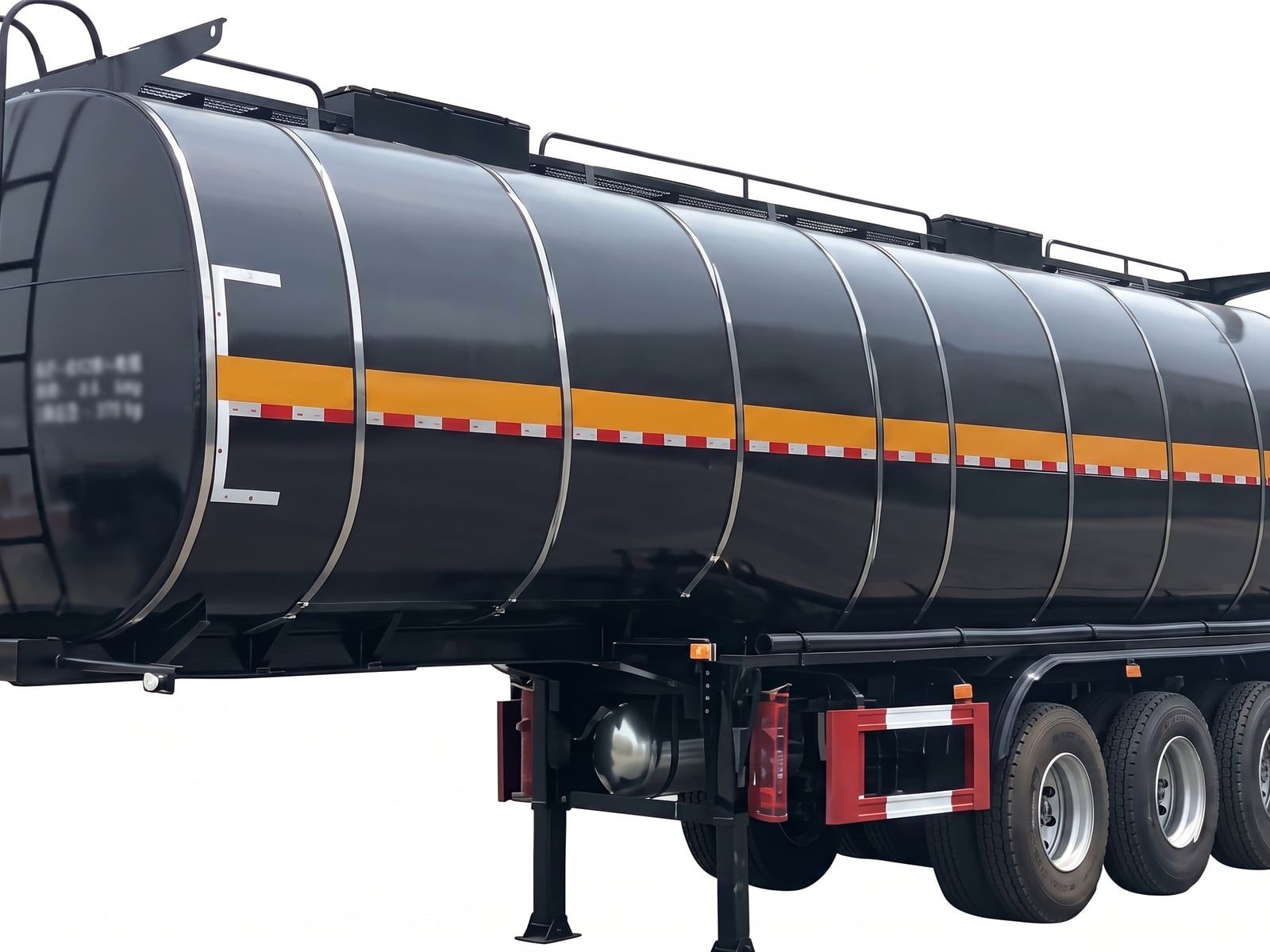
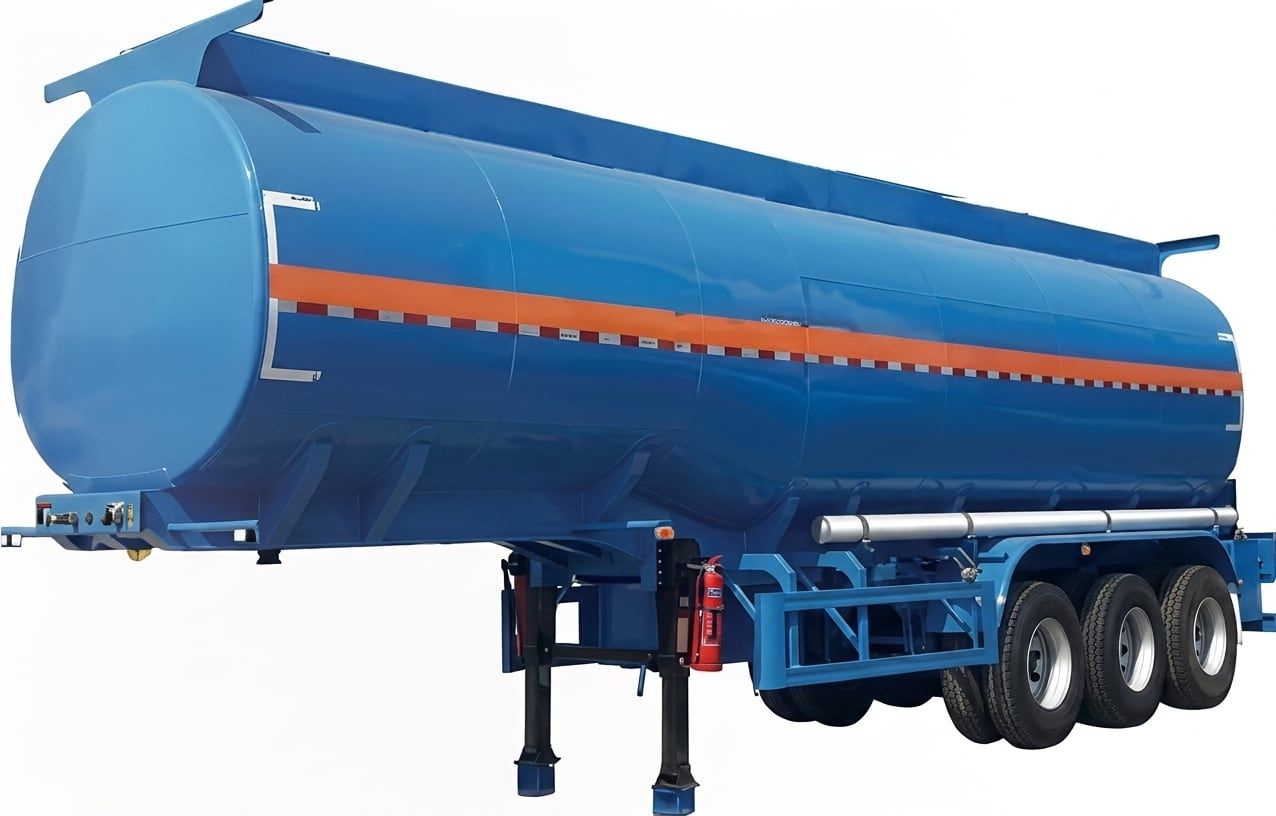
A road tanker semi-trailer for fuel and oil, manufactured in our own factory. Like our stake-side and skeletal trailers, it is built to order rather than sold from stock: the tank dimensions, the compartment layout, the axle count and the axle brand are specified by you before anything is cut.
What we settle is the equipment that decides whether it is still working in three years. JOST two-speed manual heavy-duty landing gear. A WABCO RE6 relay valve with T30/30 spring brake chambers and 40-litre air tanks. A 2 inch or 3.5 inch bolt-in king pin. Suspension mechanical or air, on leaf springs or air bags. Tyres in 11.00R20, 12.00R20, 11R22.5, 12R22.5 or 315/80R22.5, on 8.5-20, 9.0-20, 8.25-22.5 or 9.0-22.5 rims, steel optional.
What it is used for
Fuel distribution and haulage. Moving diesel and petrol from a coastal depot inland. Supplying filling stations on a route. Delivering to mines, quarries, generator farms and construction sites that burn fuel faster than a bowser can carry it. Bulk lubricant and base oil between plants.
This is the trailer a fuel business is built on, which is why the specification conversation matters more here than anywhere else in our range. A tanker that is the wrong size for your drops costs you money on every single journey for as long as you own it.
Why the build is specified rather than fixed
Three decisions do most of the work, and none of them has a general answer.
Capacity against your route. A tank sized for your largest customer is half empty on every other drop. A tank sized for the average is short for the big one and you make two trips. The right size comes from your actual delivery schedule, not from a catalogue.
Compartments. One product to bulk customers wants one compartment: simple, cheap, and every litre available for the one thing. Several products to filling stations want several, so you are not running three trailers to do one round. Each bulkhead costs capacity and adds weight.
Suspension. Air rides better and protects the tank on a rough road. Steel springs are repairable anywhere, by anyone, with parts that exist in every market town. If your route is tarmac, take air. If it is not, think hard.
We would rather have this conversation before the build than explain it afterwards.
Condition and what we do before it ships
New build, out of our own workshop. The specification sheet is agreed in writing before any deposit and it is what the Proforma Invoice describes. Photographs come to you from the shop while the tank is being built, not only when it is painted.
One item to settle early, because it is the one that most often surprises a first-time importer: discharge and metering equipment is usually regulated in your country and not in ours. Send us your requirement and we build to it.
Shipping it, and what the volume means
Shipping volume depends on the tank you specify, so there is no figure on this page. Every fixed-build trailer on this site publishes its cubic metres, and printing one for a tanker that has not been laid out yet would be a guess.
Send us the specification and we will quote the volume and the freight to your port in the same message. Loaded at our yard in Tangshan, shipped through Tianjin Port.
What to tell us
The products you carry, your typical drop size and your largest one. Whether you need compartments. Your roads. What your regulator requires on discharge and metering. Your destination port and the quantity.
Questions buyers ask about this machine
How many compartments can it have?
That is part of the build sheet. A distributor delivering one product to bulk customers wants a single compartment; one serving filling stations usually wants several so that petrol, diesel and kerosene travel together. Tell us the products and the drop sizes and we will lay it out.
Is this the same as the edible oil tanker you list?
No, and they should not be swapped. The edible oil trailer is insulated and built for food-grade liquid. This one is built for fuel. A tank that has carried diesel does not later carry cooking oil, whatever it is cleaned with.
What is fixed and what do I choose?
You choose the dimensions, the axle count and the axle brand, mechanical or air suspension, leaf spring or air bag, a 2 inch or 3.5 inch bolt-in king pin, and tyres and rims from the common sizes. We fit JOST two-speed manual heavy-duty landing gear, a WABCO RE6 relay valve, T30/30 spring brake chambers and 40-litre air tanks.
Does it come with pumps and meters?
Discharge equipment is a specification decision and it varies by country, because metering and calibration are usually regulated where you are and not where we are. Tell us what your regulator requires and what your depot already has, and we will build to it rather than fit what we assume.
What this tanker is used for
Full specification
Only what the catalogue actually prints. A row that is not here is a figure we do not have yet. Ask, and we confirm it against the machine in our yard rather than guess at it.
- Capacity
- 13 t
Worth knowing
Dimensions, axle count and axle brand to order. Mechanical or air suspension · leaf spring or air bag · 2″ / 3.5″ bolt-in king pin · JOST two-speed manual heavy-duty landing gear · WABCO RE6 relay valve, T30/30 spring brake chambers, 40-litre air tanks. Tyres 11.00R20 · 12.00R20 · 11R22.5 · 12R22.5 · 315/80R22.5; rims 8.5-20 · 9.0-20 · 8.25-22.5 · 9.0-22.5, steel optional.
Other tankers
All tankers
Low-temperature liquid
Low-Temperature Liquid Transport Semi-Trailer
- Capacity
- 52.6–60.72 m³, by build