Edible oil · Tankers
Edible-Oil Tanker Semi-Trailer
Insulated, food grade, and four capacities. Tell us the volume you need and we will name the build rather than sell you the one we have.
What this tanker is
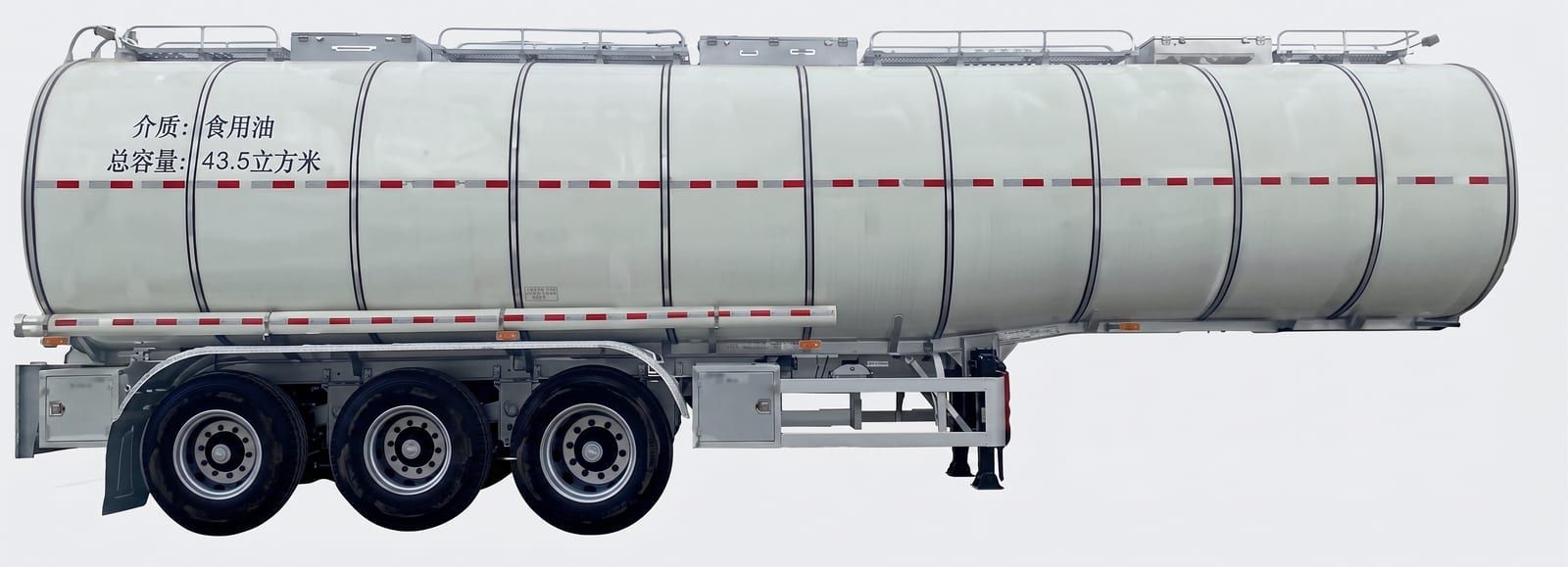
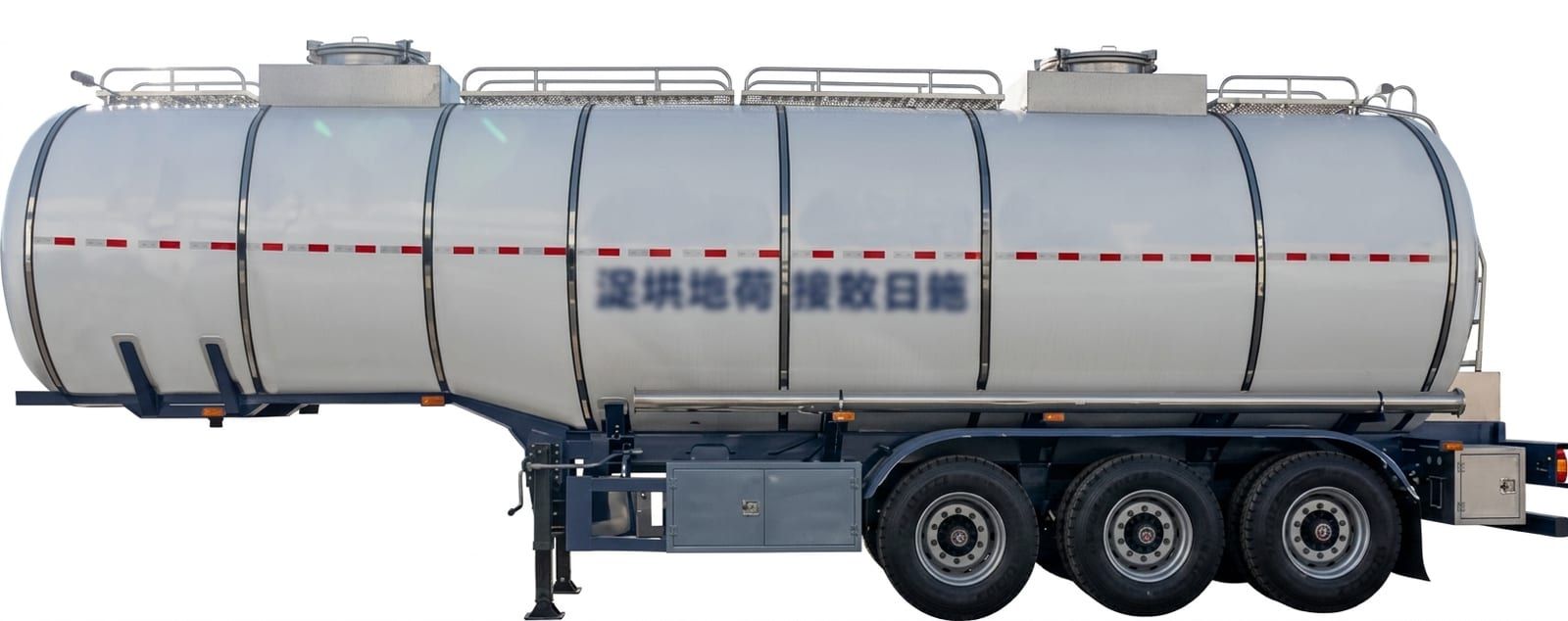
An insulated food-grade tanker semi-trailer, manufactured in our own factory, for edible oil and other ordinary liquids. It comes in four builds and the difference between them is capacity:
- JGY9402GSY, 37.1 m³
- JGY9406GPG, 35.8 m³
- JGY9406GPG, 37.6 m³
- JGY9406GPG, 43.5 m³
They sit on two chassis. One is 11.70 m long, 2.55 or 2.50 m wide and 3.90 m tall, on a 5,650 mm wheelbase. The other is 11.00 m long, 2.55 or 2.50 m wide and 3.85 m tall, on a 5,330 plus 1,310 plus 1,310 mm wheelbase.
What it is used for
Haulage, and specifically the movement of edible oil in bulk. Palm oil from a mill or a port terminal to a refinery. Refined oil from a refinery to a packaging plant. Bulk oil to industrial food producers, soap makers and feed mills. It also carries other ordinary liquids where a food-grade insulated tank is what the cargo needs.
Across francophone West Africa this is a real trade rather than a niche one, and the buyers are refineries, traders and the hauliers who serve them.
Why insulation, and why it decides the purchase
Take insulation off this trailer and you have a cheaper tank that fails at the job.
Cold sets the load. Palm oil and several other edible oils are semi-solid below their melting range. A tank that loses heat across a long inland leg arrives with a cargo that will not flow, and the cost of that is not the temperature, it is the day spent getting it out and the customer who did not get their delivery.
Heat degrades it. The other failure is quality rather than logistics. Oil that cycles hot and cool in an uninsulated tank under sun does not arrive in the condition it left in, and a buyer testing on arrival will find it.
Separation from fuel is absolute. This is the point most worth making plainly. Our fuel tanker and this one look similar and are not interchangeable. A tank that has carried diesel is not afterwards a food-grade tank, and no amount of cleaning restores its paperwork. If you carry both products, you buy both trailers.
Condition and what we do before it ships
New build, from our own workshop. Because there are four builds rather than one model, the build and its capacity are named in writing on the specification sheet and on the Proforma Invoice before any deposit. Photographs come to you from the shop while the tank is being built.
Discharge equipment, pumps and any hygiene certification your regulator requires should be raised at specification stage. Food-grade requirements vary by country and are enforced where you are, not where we are, so we build to your rule rather than to an assumption about it.
Shipping it, and what the volume means
Shipping volume depends on which of the four builds you take and which chassis it sits on, so there is no single figure on this page. The two chassis are 11.70 by 2.55 by 3.90 m and 11.00 by 2.55 by 3.85 m, and the difference between them on a freight bill is real.
Tell us the build and we will quote the volume and the freight to your port together. Loaded at our yard in Tangshan, shipped through Tianjin Port.
What to tell us
The oil you are carrying and its typical temperature on loading. Your drop size and your largest customer. Whether the trailer will ever carry a second product. Whatever your regulator requires on food-grade certification and discharge. Your destination port and the quantity.
Questions buyers ask about this machine
Which of the four builds should I take?
It follows from your volume. The four are 35.8, 37.1, 37.6 and 43.5 m³. The three around 36 to 38 m³ are close enough that the choice comes down to the chassis and wheelbase under them; the 43.5 m³ build is a genuinely bigger tank on a longer trailer. Tell us your drop size and we will name it.
Why does an edible oil tanker need insulation?
Palm oil and several other edible oils thicken or solidify as they cool, and a load that has set is a load you cannot discharge. Insulation holds the temperature through the journey. It also matters in the other direction: heat cycling degrades oil quality in transit.
Can it carry anything other than edible oil?
The catalogue lists it for edible oil and ordinary liquids, so it is not restricted to one product. What it must not do is alternate with fuel. A tank that has carried diesel is not a food-grade tank afterwards, and no cleaning schedule makes it one again on paper.
What are the overall dimensions?
Two chassis, depending on the build: 11.70 by 2.55 or 2.50 by 3.90 m on a 5,650 mm wheelbase, or 11.00 by 2.55 or 2.50 by 3.85 m on a 5,330 plus 1,310 plus 1,310 mm wheelbase. Ask us which pairs with the capacity you want and we will confirm it in writing.
What this tanker is used for
Full specification
Only what the catalogue actually prints. A row that is not here is a figure we do not have yet. Ask, and we confirm it against the machine in our yard rather than guess at it.
- Capacity
- 35.8–43.5 m³, by build
Worth knowing
Insulated tanks for edible oil and ordinary liquids. Four builds: JGY9402GSY at 37.1 m³, and JGY9406GPG at 35.8, 37.6 and 43.5 m³. Overall 11.70 × 2.55 / 2.50 × 3.90 m or 11.00 × 2.55 / 2.50 × 3.85 m; wheelbase 5,650 or 5,330 + 1,310 + 1,310 mm. Tell us the volume you need and we will name the build.
Other tankers
All tankers
Low-temperature liquid
Low-Temperature Liquid Transport Semi-Trailer
- Capacity
- 52.6–60.72 m³, by build