Compressed natural gas (CNG) · Tankers
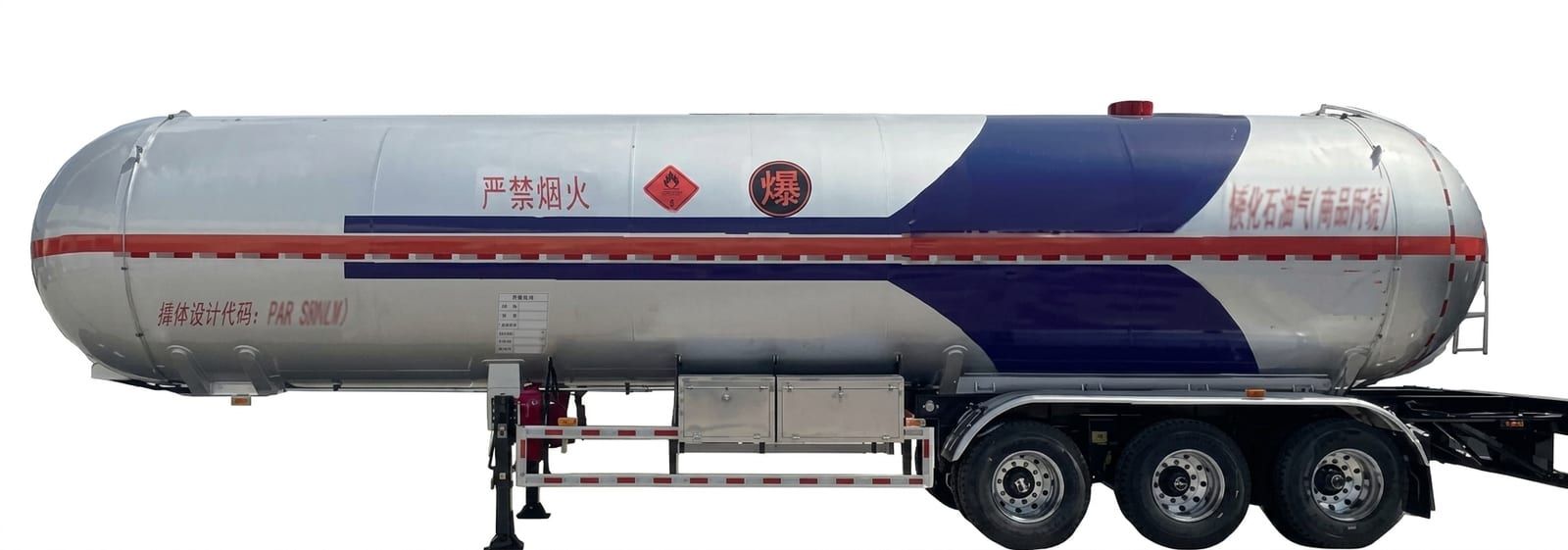
CNG Transport Semi-Trailer
Compressed gas rather than liquefied. Stainless, up to 20 MPa, with on-board recovery that returns 95% of the load.
What this trailer is
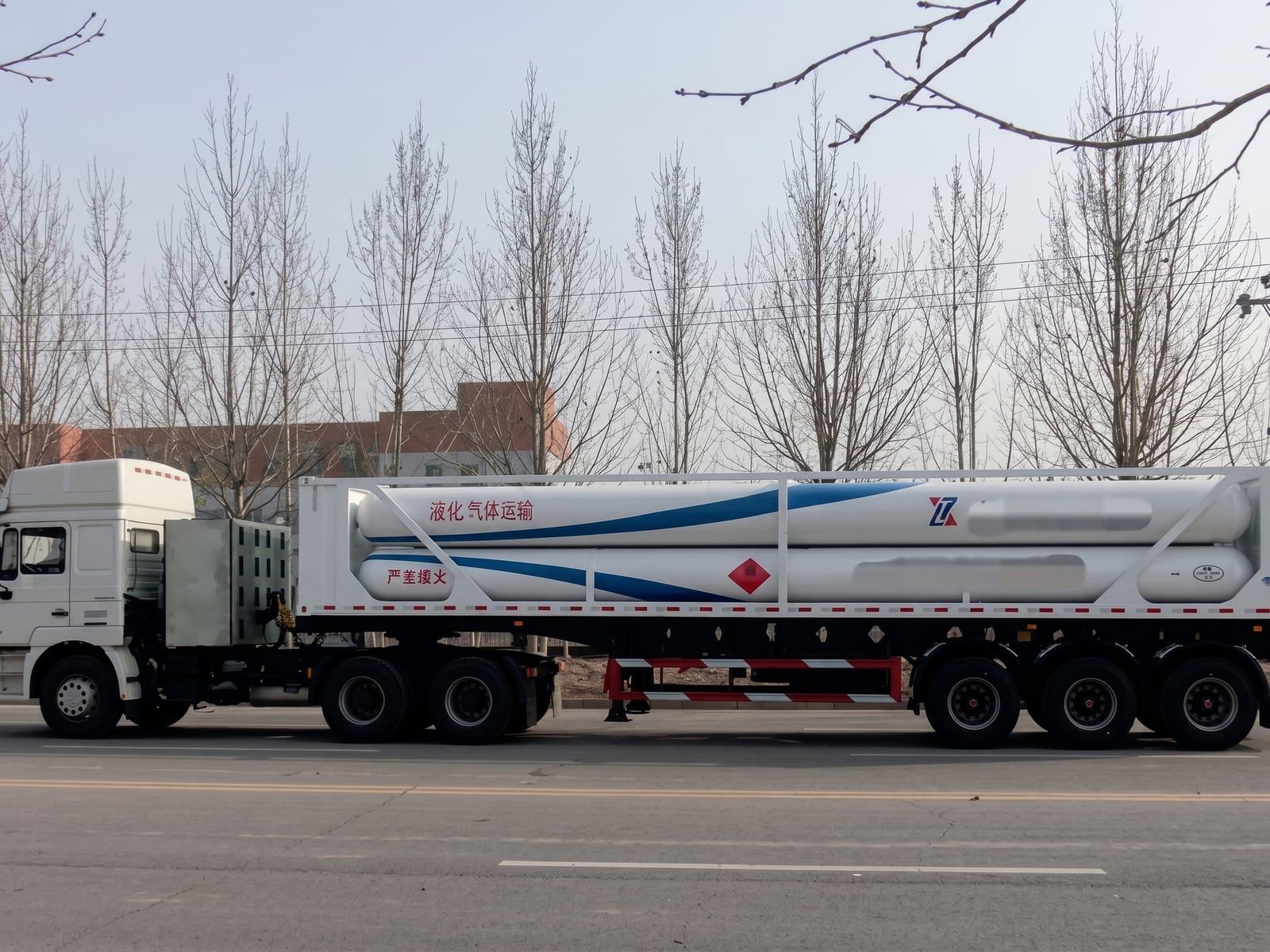
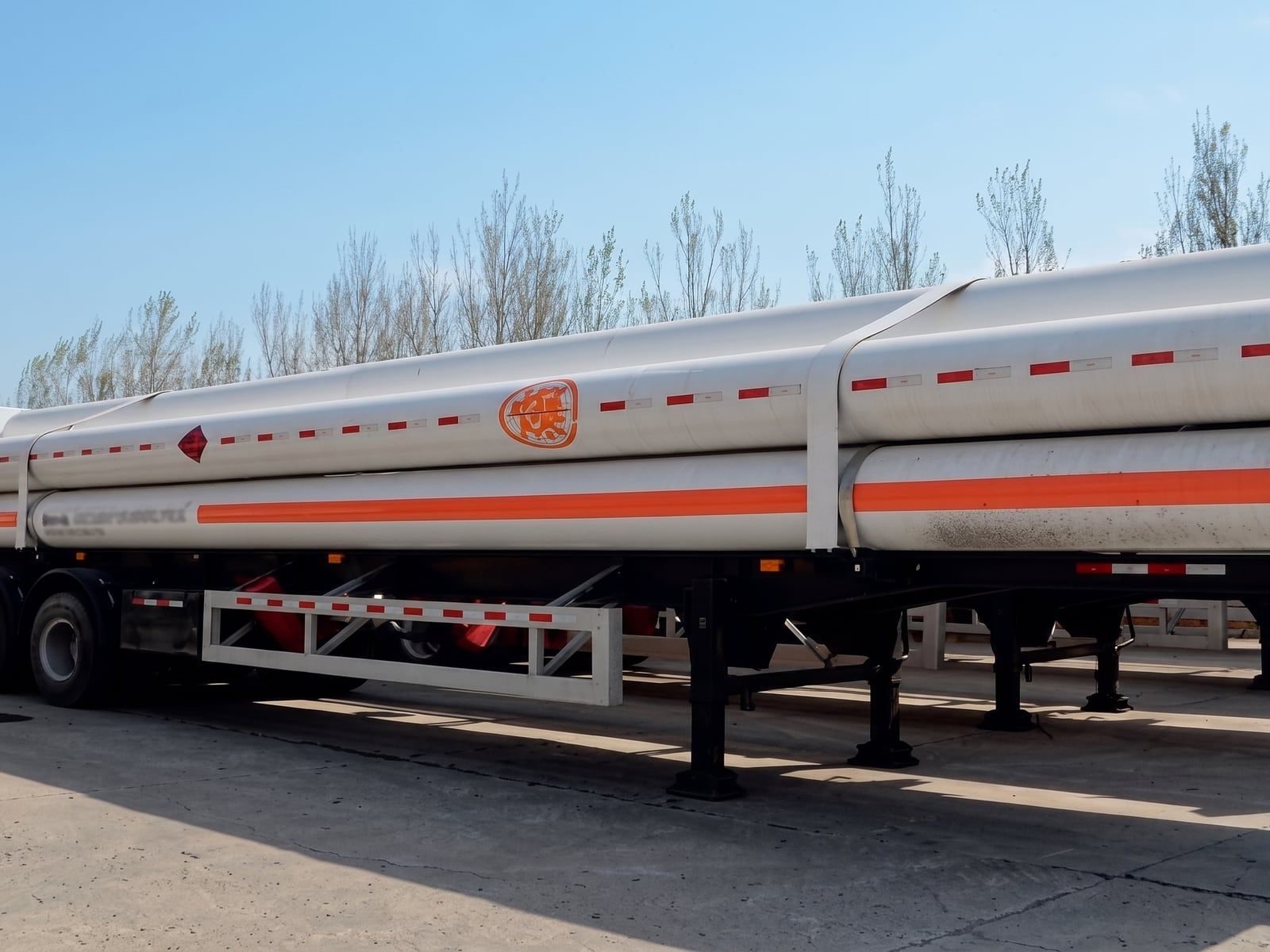
A compressed natural gas transport semi-trailer, manufactured in our own factory. It is 13.00 by 2.55 by 3.95 m over a 5,100 mm wheelbase, built in stainless steel, and it carries gas rather than liquid.
Working pressure is up to 20 MPa. Displacement is 22,000 Nm³/h. Gas recovery rate is 95%. The main motor is 30 kW, total system power is capped at 80 kW, and venting noise is held under 75 dB.
What it is used for
Fuel distribution and haulage, on what the gas industry calls a virtual pipeline. Natural gas is compressed at a source, usually a mother station on a pipeline or at a field, loaded onto trailers, driven to somewhere no pipe reaches, and decompressed into a local network or straight into an industrial burner.
The customers are the places a pipeline was never going to reach: cement works, glass plants, textile mills, food processors, independent power producers, and CNG filling stations for vehicle fleets. Across West Africa this is how gas gets to industry outside the coastal corridor.
Why compressed rather than liquefied, and what the numbers buy
We build trailers for all three gas products, and they are not alternatives to one another.
Against LNG. Liquefied natural gas carries far more energy per trailer, because a liquid is denser than a gas at any pressure. It needs a liquefaction plant at one end and a regasification arrangement at the other. CNG needs a compressor. For a route of tens of kilometres to a single industrial customer, CNG is usually the whole answer. For hundreds of kilometres to a distribution hub, LNG wins on energy per journey.
Against LPG. Different product. LPG is propane and butane, sold in cylinders and used for cooking. CNG is methane from a pipeline. They are not substitutes and the equipment is not shared.
The recovery figure is the commercial one. 95% recovery is the number to look at on a competing quotation, because a trailer that returns 10% of its load to the terminal on every run is one that costs you a tenth of your revenue forever, and it will not say so anywhere on its specification sheet.
The noise figure is the one that decides where you can work. Under 75 dB at vent means unloading in a built-up area is practical. Above it, in many places, it is not.
Condition and what we do before it ships
New build, out of our own workshop, and the specification is what the Proforma Invoice describes.
The same point applies as to the other two gas trailers we build: high pressure equipment is regulated by the country importing it, and that regulation is enforced on arrival. Send us your authority’s requirement in writing and we will tell you what we can build to and what we cannot. We will not tell you it clears a rule neither of us has seen.
Shipping it, and what the volume means
At 13.00 by 2.55 by 3.95 m this is a long, tall trailer and sea freight is charged on that box rather than on its weight. Get the freight quoted before you settle a quantity: on a machine this size the shipping is a real part of the landed cost, not a rounding error.
Loaded at our yard in Tangshan, shipped through Tianjin Port.
What to tell us
Your source pressure and your discharge arrangement. The route length and the number of runs a day you intend. Whether you are feeding a network, a station or a single burner. What your authority requires on high-pressure certification. Your destination port and the quantity.
Questions buyers ask about this machine
What does 95% gas recovery mean in practice?
When you unload, the pressure in the trailer falls until it can no longer push gas into the receiving system. Whatever is left is called heel, and without recovery equipment it goes back to the terminal unsold. On-board recovery pulls that down so about 95% of what you loaded is actually delivered. Over a year of runs that is the difference between a profitable route and a marginal one.
How is CNG different from the LPG and LNG trailers you build?
CNG is natural gas held as a gas under very high pressure, up to 20 MPa here. LNG is the same gas held as a very cold liquid, which is our cryogenic trailer. LPG is a different product entirely, held as a liquid under moderate pressure. They are three separate machines and none of them substitutes for another.
Why stainless steel?
Corrosion at 20 MPa is not a maintenance issue, it is a safety issue, and the gas arriving from a compressor station carries moisture. Stainless is what keeps the wetted parts sound over the life of the trailer.
What power does it need?
The main motor is 30 kW and total system power is capped at 80 kW. Venting noise is under 75 dB, which matters when you are unloading inside a town rather than at an industrial terminal. Tell us your site power and we will confirm the arrangement.
What this tanker is used for
Full specification
Only what the catalogue actually prints. A row that is not here is a figure we do not have yet. Ask, and we confirm it against the machine in our yard rather than guess at it.
- Overall dimensions
- 13.00 × 2.55 × 3.95 m
Worth knowing
Compressed natural gas. Stainless steel · working pressure ≤ 20 MPa · displacement 22,000 Nm³/h · gas recovery rate 95 % · main motor 30 kW, total system power ≤ 80 kW · venting noise ≤ 75 dB · wheelbase 5,100 mm.
Other tankers
All tankers
Low-temperature liquid
Low-Temperature Liquid Transport Semi-Trailer
- Capacity
- 52.6–60.72 m³, by build