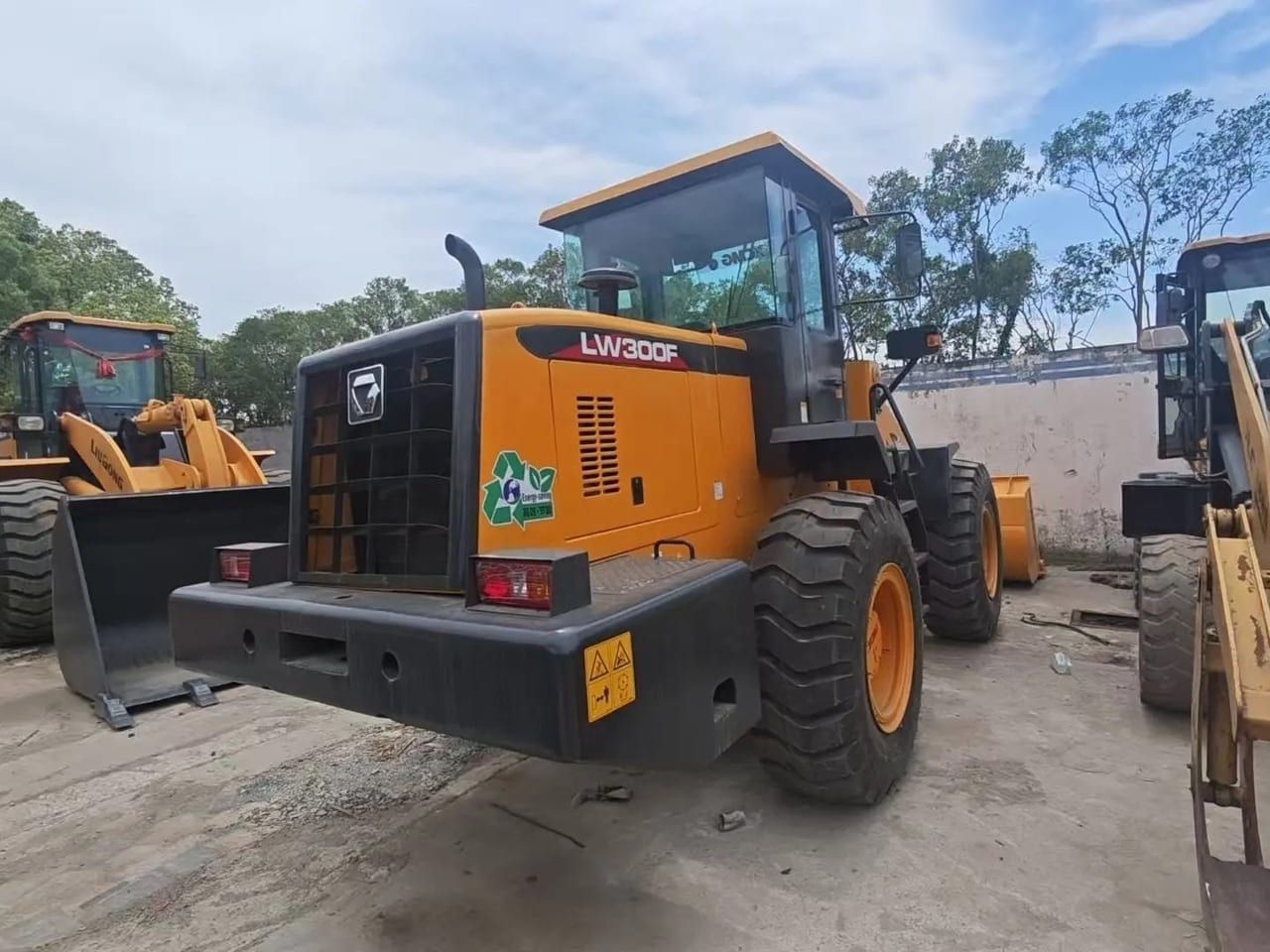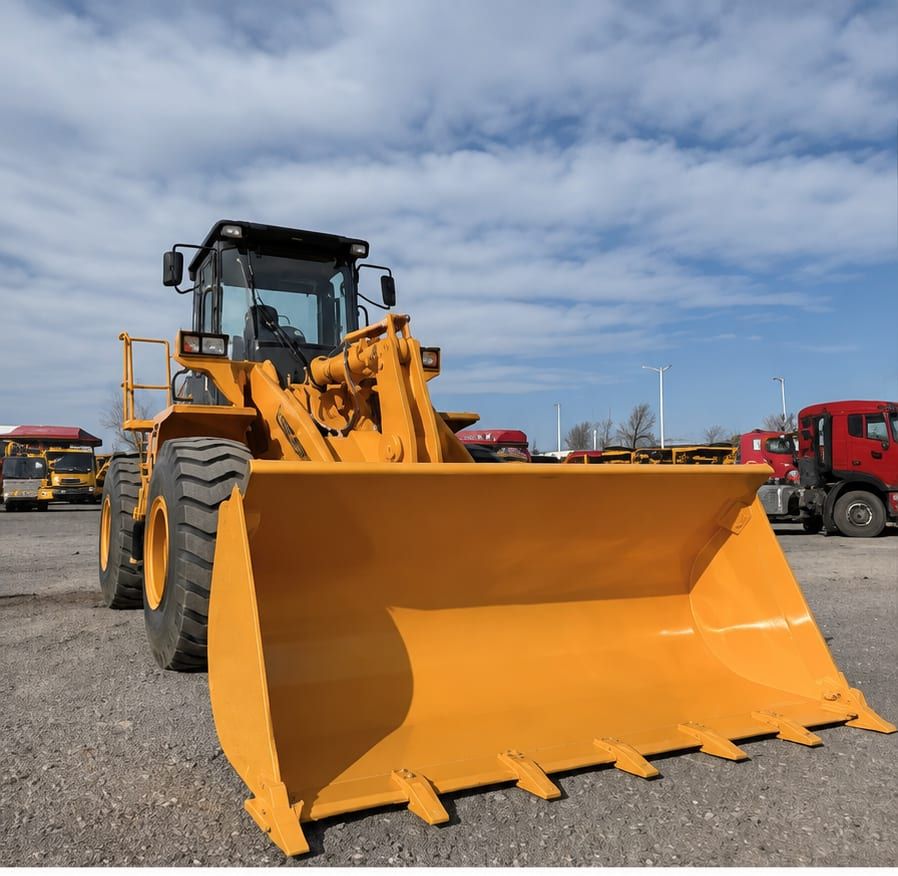
Wheel loader
Wheel Loader 17 t, Weichai 180
- Power
- 180 hp
- Handles
- 17 t machine
- Shipping volume
- 55 m³(calculated)
XCMG · Wheel loaders
Five tonnes in every bucket. The loader size that runs most of the world's quarries and aggregate yards.
162 kW @ 2200 rpm
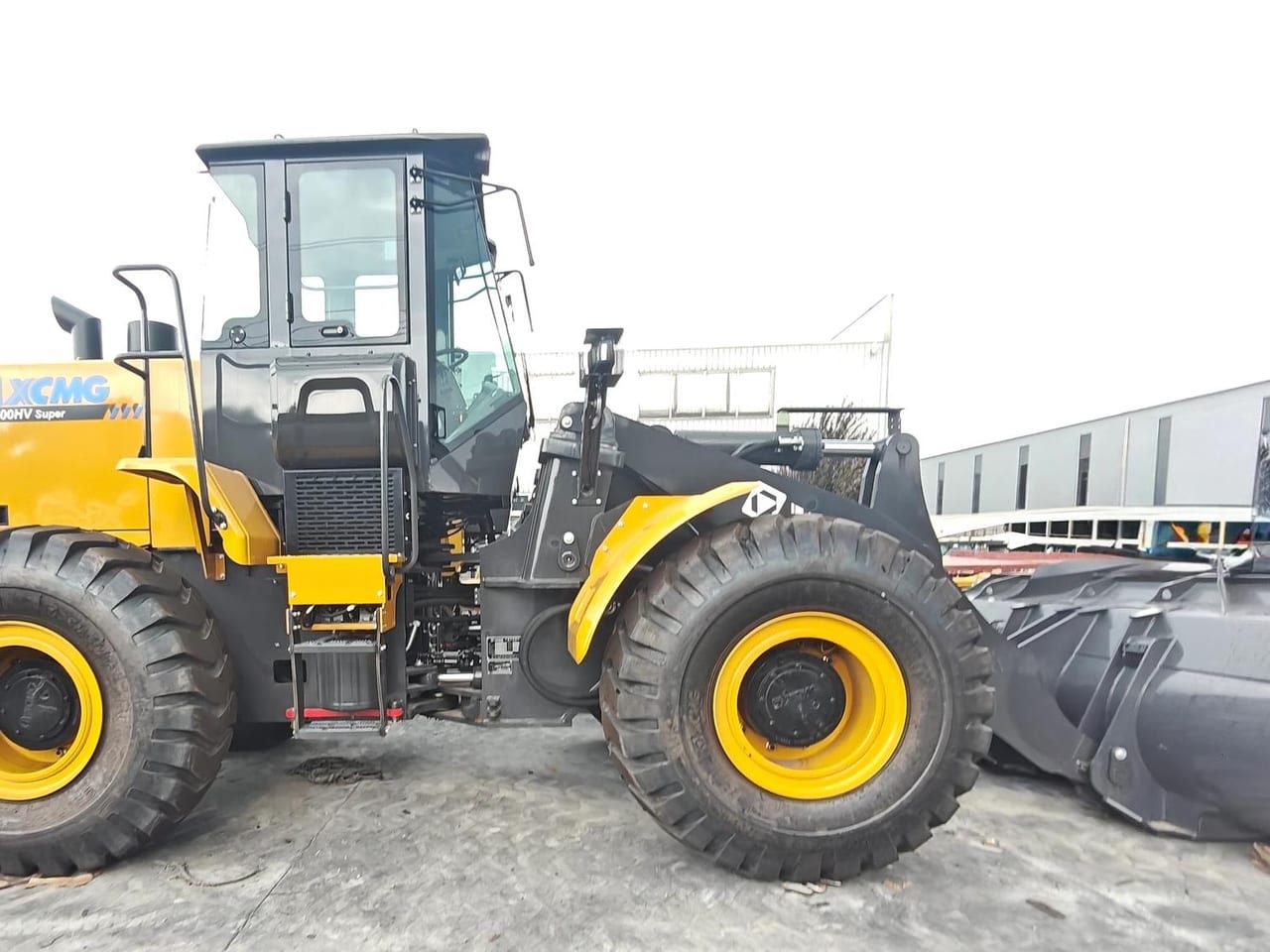
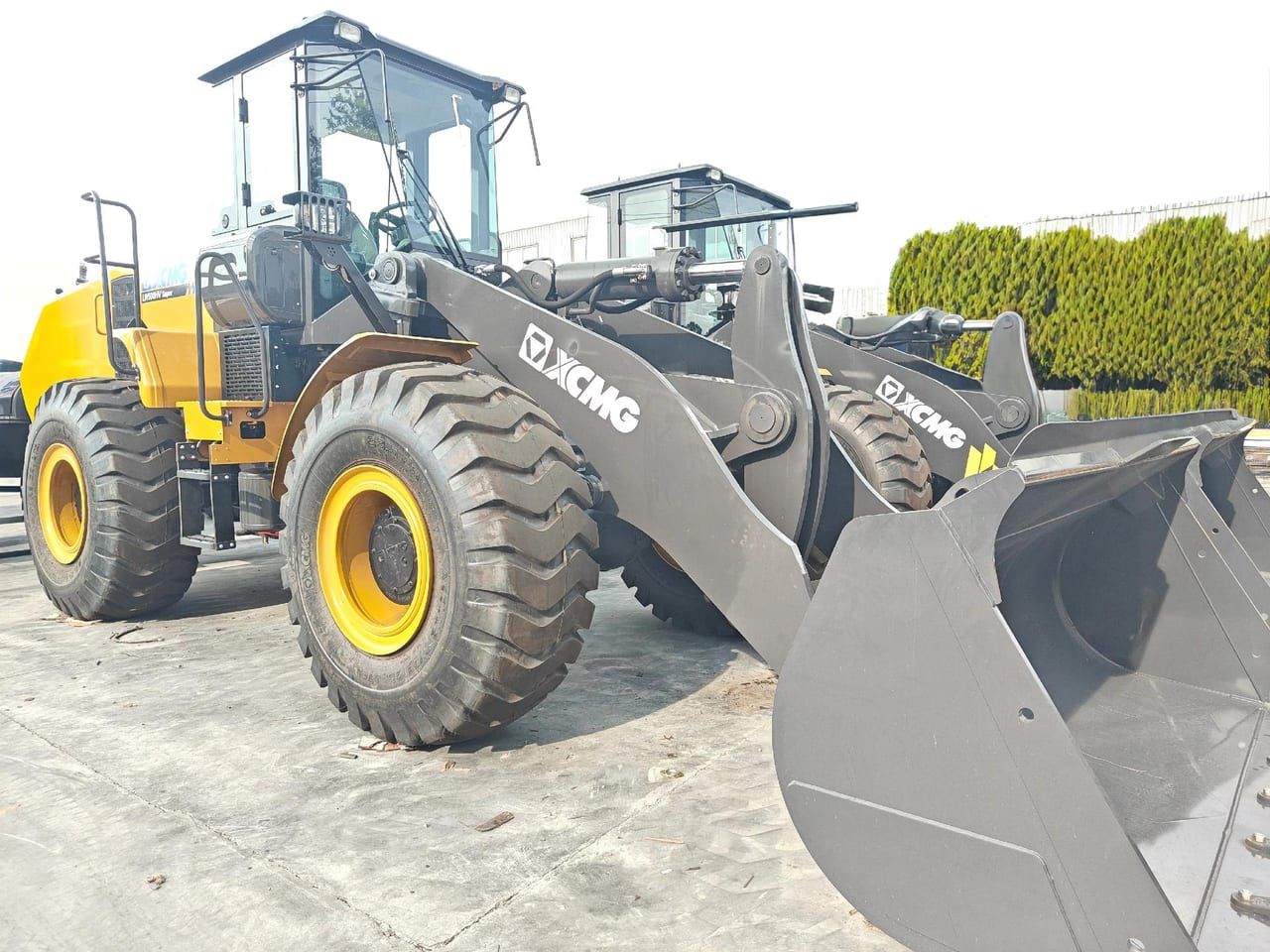
An XCMG LW500HV Super, a four-wheel-drive wheel loader producing 162 kW at 2200 rpm. Rated load is 5,000 kg. It carries a 3.0 m³ bucket as standard, with options from 2.5 to 4.5 m³ to suit the material.
Quarries and crushing plants. Feeding the crusher from the stockpile and loading finished aggregate into trucks.
Ports and bulk terminals. Moving clinker, fertiliser, coal and grain on the quay and in the warehouse.
Concrete batching. Charging the batching plant with sand and stone all day.
Mines. Stockpile management, rehandling ore, clean-up around the pit and the plant.
There are loaders of every size, but the 5-tonne class is the one most operations end up owning, for a simple reason: it matches the trucks. A 5-tonne bucket fills a standard road tipper in a small number of passes, which keeps the truck queue short without the cost of a much larger machine.
It is also the size the parts market is built around. Tyres, bucket teeth, cutting edges, pins and filters for 50-class loaders are stocked almost everywhere, which matters in a place where waiting a month for a part means a month of lost work.
Choosing the bucket. The most common mistake with a loader is buying the wrong bucket. Too big for dense material and the machine is overloaded on every pass, which wears the axles and the lift arms. Too small for light material and you pay for a big machine and use a small one. Tell us the material and its weight, and we will specify the bucket.
Why XCMG. XCMG loaders are among the most widely used Chinese machines in Africa, with dealers in most of the markets we ship to. Parts and service are close to hand.
Through our own workshop before it loads, with photographs at every stage.
The articulation joint. The pivot in the middle of the machine takes every load. Play in the joint means worn pins and bushes.
The transmission. Ask for a video of the machine driving forward and reverse under load. Slow or harsh shifts show here.
The bucket and the lift arms. Look at the cutting edge, the teeth and the welds on the lift arms. Cracks there are a sign of a hard life.
Loaded at our yard in Tangshan, shipped through Tianjin Port. The catalogue gives the loader’s working figures rather than its transport size, so we confirm the shipping dimensions against the machine when we quote.
The material, how heavy it is, and the trucks you load. The bucket size you want. Your destination port and the quantity.
The rated load: the weight the loader lifts and carries safely in its bucket, 5,000 kg here. Loaders are sold by this figure, and the 5-tonne class, often called a 50 loader, is the most common size working in quarries, ports and batching plants.
It depends on how heavy the material is. The standard 3.0 m³ bucket suits sand and gravel. A smaller bucket, down to 2.5 m³, is for dense material like wet clay or ore, so the machine is not overloaded. A larger one, up to 4.5 m³, is for light material such as coal or woodchip, where a small bucket wastes the machine.
Yes, and loading tippers from a stockpile is its main job. At 5 tonnes a bucket it fills our 6×4 tipper in a handful of passes. Tell us the side height of your trucks and we will confirm the reach.
It is the bigger machine: 5,000 kg rated load against 3,000 kg, and a 3.0 m³ bucket against 1.8 m³. Choose the LW500HV for production loading, and the LW300FV for general yard and site work where a smaller, cheaper machine is enough.
Only what the catalogue actually prints. A row that is not here is a figure we do not have yet. Ask, and we confirm it against the machine in our yard rather than guess at it.
Wheel loader