XCMG · Road rollers
XCMG Single-Drum Road Roller 22 t
Twenty-two tonnes of compaction on one drum. The machine that decides whether the road you build is still there in three years.
188 hp
62 m³shipping volume
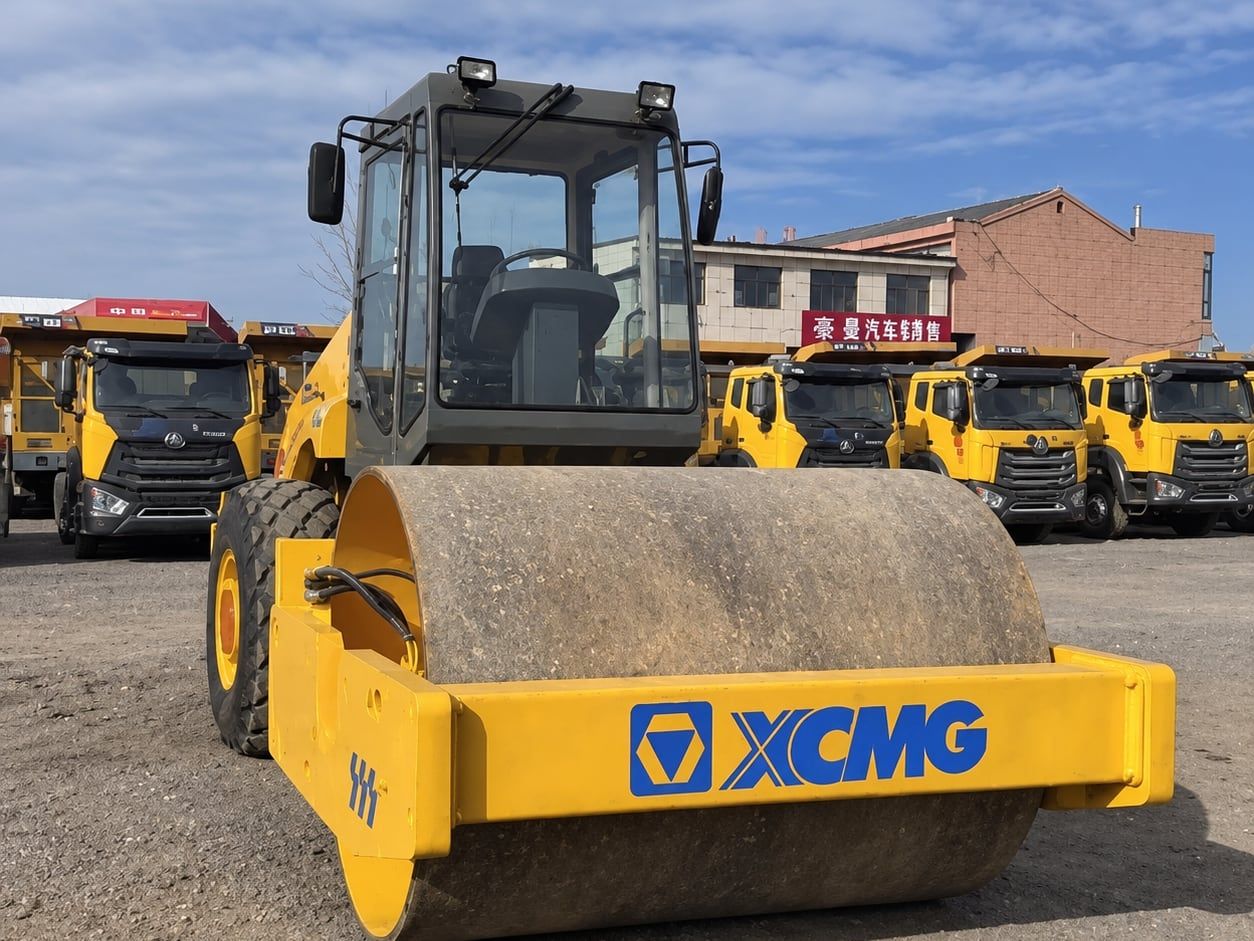
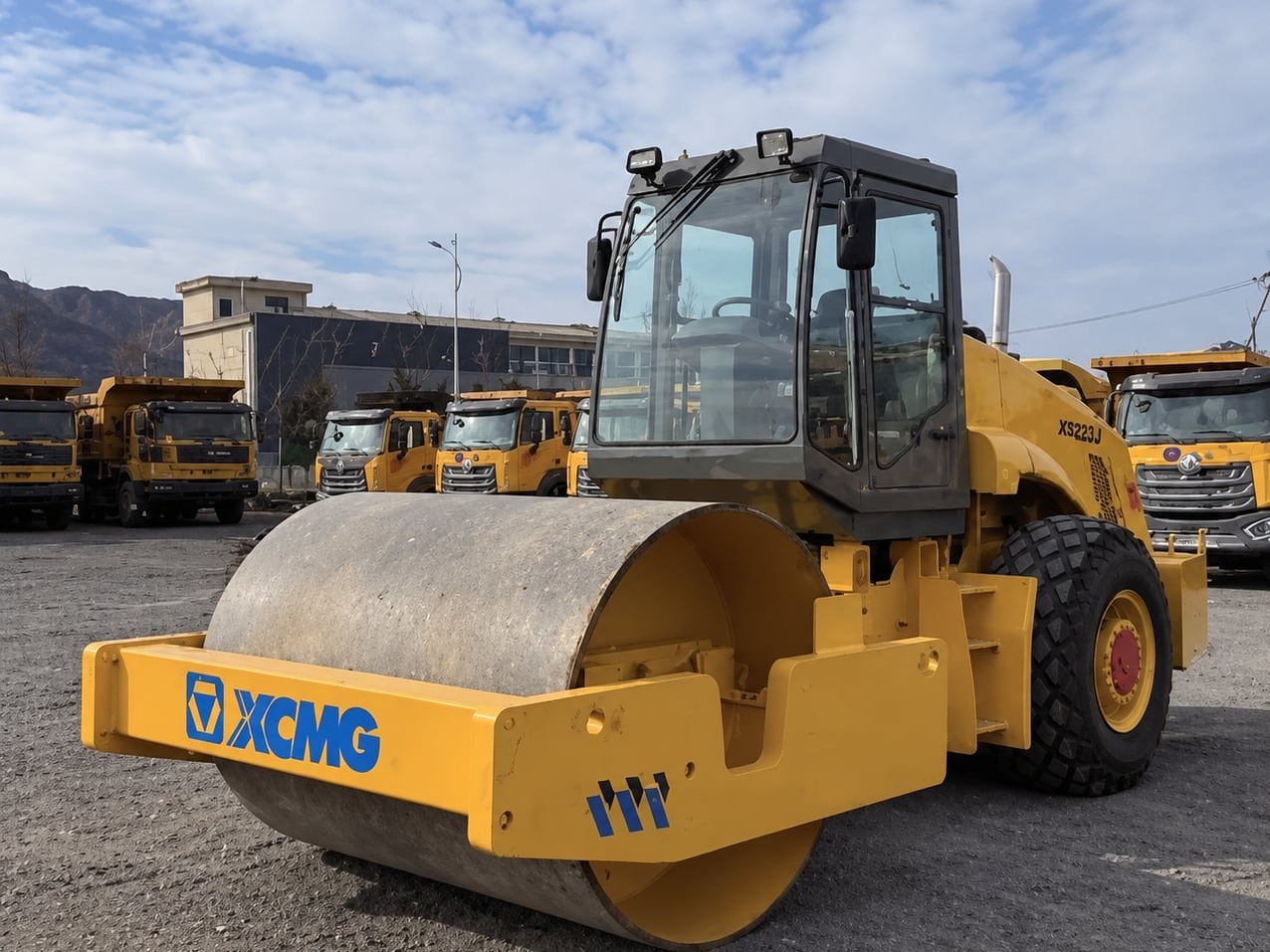
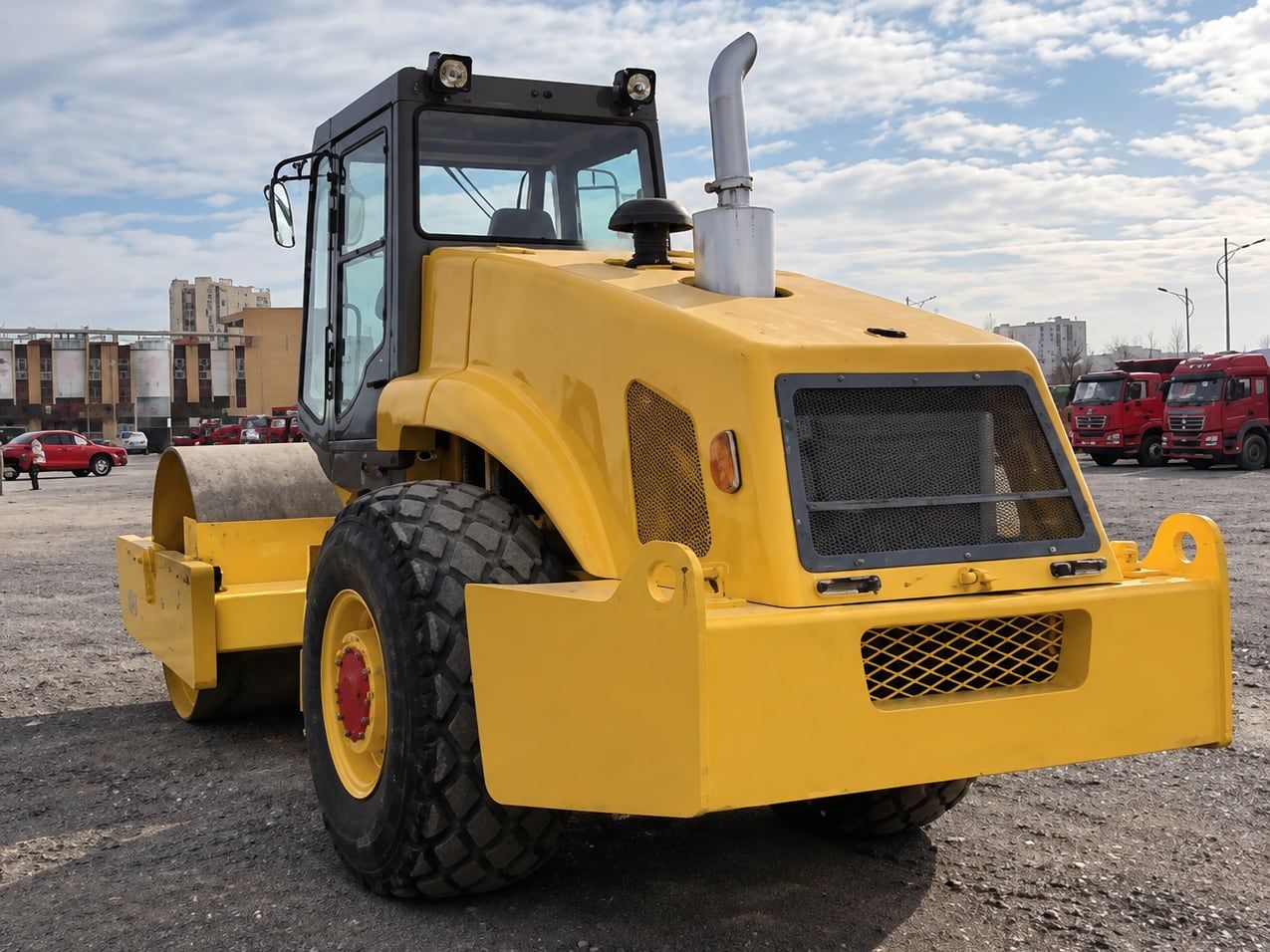
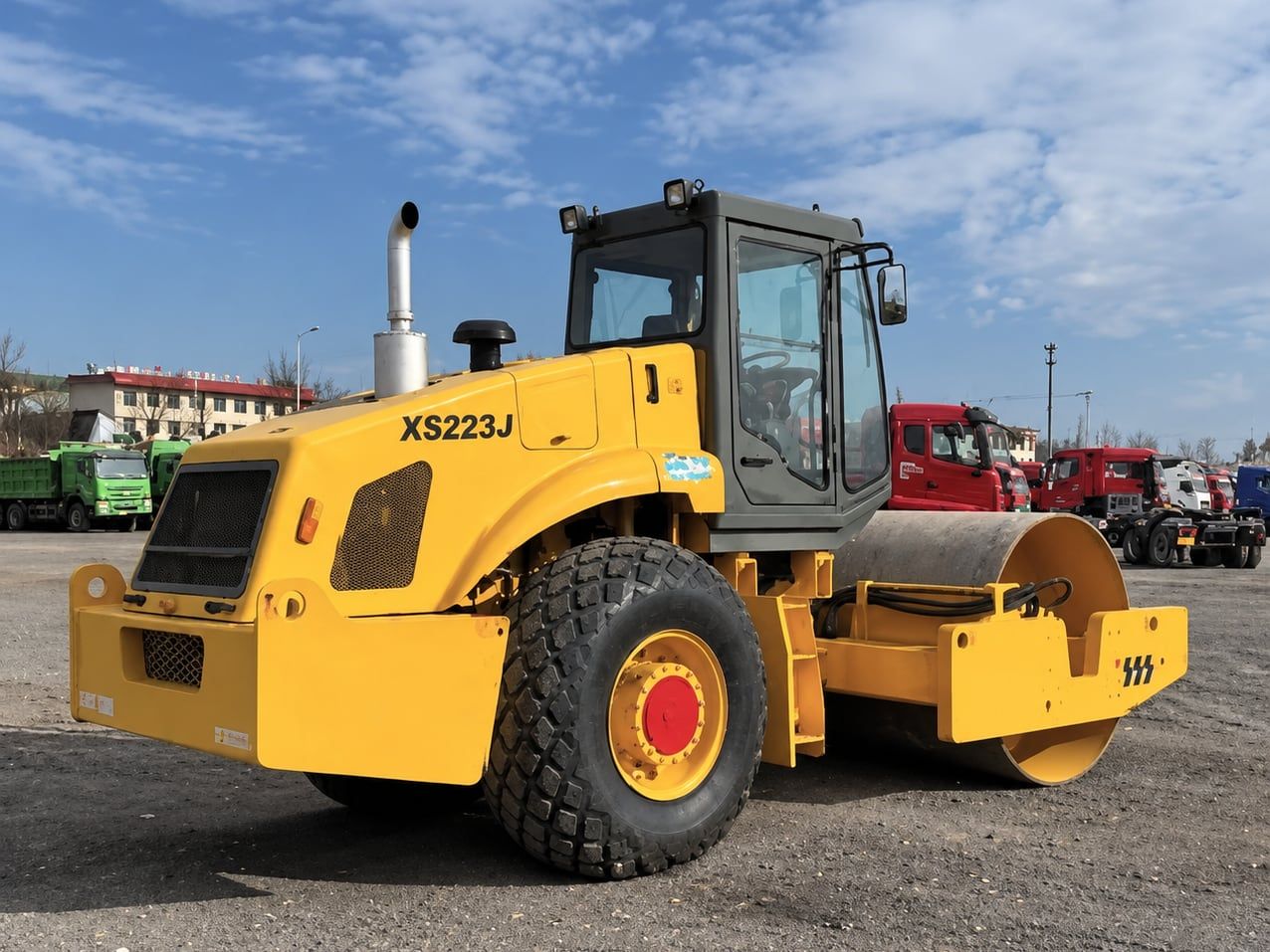
What this machine is
An XCMG single-drum vibratory road roller at 22 tonnes, with a 188 hp Weichai engine. Overall 6.29 m long, 2.98 m wide and 3.26 m tall. It occupies 62 m³ on the vessel.
Our catalogue prints the engine, the weight and the dimensions and does not print a build year or an hour reading for this machine. Those rows are absent from the specification table rather than estimated. Ask and we confirm them against the machine.
What it is used for
Construction, and specifically the part of it that is buried.
Road subgrade and base. Compacting each layer of fill before the next goes on. This is what the machine is for and it is most of what it does.
Dam and embankment construction. Layer by layer, to a specified density, which is the whole engineering requirement of the structure.
Platforms and hardstanding. Yards, laydown areas, industrial slabs, airfield and port aprons. Anything that will carry heavy wheels later.
Trench reinstatement and site preparation on larger jobs.
Why compaction is the machine to get right
This is the least glamorous machine in our catalogue and the one whose absence does the most damage.
A road, a dam or a platform fails from underneath. Fill that has not been compacted to density settles unevenly under load and under water, and everything built on top of it cracks. The surface gets the blame and the surface is not the problem. Compaction is the only part of the work that cannot be inspected after it is covered, which is exactly why it is the part most often skimped and the part most worth owning your own machine for.
Why single drum, and not double. A single drum has one steel vibrating drum at the front and driven rubber tyres at the back. The tyres give traction on loose fill, which steel does not, so the machine can climb and work on unconsolidated ground. That is the earthworks configuration. A double-drum roller has steel at both ends, no tyre traction, and is built to finish asphalt smoothly. If your work is laying and finishing blacktop, this is not the machine and we do not currently hold the one that is.
Why 22 tonnes. It is the standard class for road base and dam work. Lighter machines compact thinner lifts and suit confined sites; you simply do more passes. Heavier machines exist for very deep fill and become a transport problem.
Condition, and what we do before it ships
Through our own workshop before it loads: inspected, put right, and photographed at each stage.
On a roller, ask for two things above all. The drum surface and the drum bearings, because a scored or out-of-round drum leaves marks in everything it touches and bearings are a serious job. And the vibration system, because a roller that rolls but does not vibrate properly is doing a fraction of the work and it is not obvious from a photograph or a short demonstration. Ask us to send video of it vibrating, not just standing.
Also ask for the hour meter, since the catalogue does not print one.
Shipping it
62 m³, calculated from the overall dimensions. It is a compact machine for its weight, so it ships for considerably less than the 22-tonne excavator at 94 m³ despite weighing the same.
Loaded at our yard in Tangshan, shipped through Tianjin Port.
What to tell us
The work: road, dam, platform or general site. Your layer depths and any density specification you have to meet. Whether you need a low-bed to move it. Your destination port and the quantity.
Questions buyers ask about this machine
What does single drum mean?
One large steel vibrating drum at the front and rubber tyres at the back. It is the configuration for earthworks: subgrade, base course, dams and platforms. A double-drum roller, with steel at both ends, is for finishing asphalt, which is a different job and a different machine.
Is 22 tonnes the right weight?
For road subgrade and base, dam construction and heavy platform work, yes. It is the standard class for that work worldwide. Lighter rollers are for thinner lifts and confined areas; heavier ones exist for very deep fill and are harder to move.
How do I get it to site?
On a low-bed trailer. At 6.29 m long and 22 tonnes it sits comfortably inside the rated loads of the low-bed builds we manufacture, and it is one of the easier machines to move. Ask us to quote both together.
Is XCMG a reasonable brand for this?
XCMG is one of the largest construction equipment makers in China and rollers are a core part of what it builds. For compaction plant it is a mainstream choice rather than an unusual one, and that matters for parts and for resale.
What this road roller is used for
Full specification
Only what the catalogue actually prints. A row that is not here is a figure we do not have yet. Ask, and we confirm it against the machine in our yard rather than guess at it.
- Power
- 188 hp
- Engine
- Weichai
- Handles
- 22 t machine(as printed in the catalogue)
- Shipping volume
- 62 m³(calculated from the dimensions)
- Overall dimensions
- 6.29 × 2.98 × 3.26 m
- Machine weight
- 22 t
Shipping this machine
Sea freight is charged on volume, not weight. This one occupies 62 m³. Loaded at Tangshan City, Hebei, shipped through Tianjin Port. What CBM does to your bill → Where we ship from →